Wednesday, 28 March 2018

Zodiacal nonsense


The name Zodiac refers to the twelve constellations of stars that are of particular interest to astrologers. Everyone knows which “sign” they belong to, but what do they mean in reality?

The plane of Earth’s orbit around the Sun is known as the Ecliptic. It is also the plane within which all the recognised planets orbit. Given that the passage taken by Earth round the Sun takes one year to complete, the star background on the opposite side of the Sun as seen from Earth also changes.

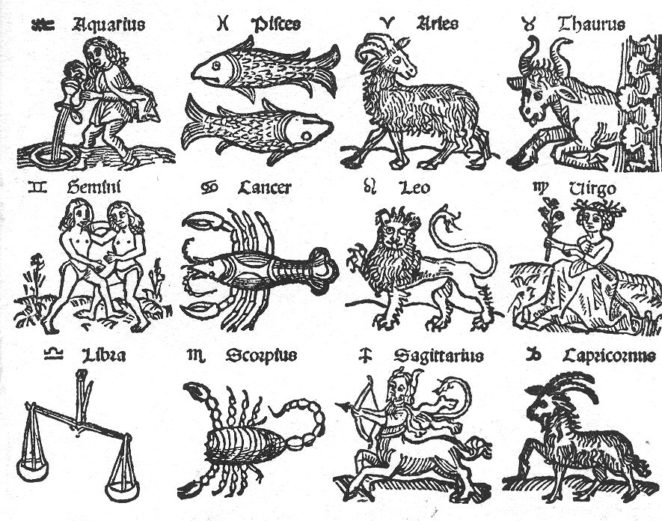
The ancient Greeks distinguished twelve constellations though which the Sun appeared to pass. These are the Zodiacal constellations of Capricorn, Aquarias, Pisces, Aries, Taurus, Gemini, Cancer, Leo, Virgo, Libra, Scorpio and Sagittarius. It has to be said that they are not necessarily the most recognisable constellations in the night sky!

One problem with determining these as the Zodiacal constellations is that they are not all the same size, and so it is not true that the Sun is “in Leo” (for example) for one month before moving entirely out of Leo and into Virgo.

An even greater problem is that the degree of the Earth’s tilt has changed slightly since ancient times, and this is enough to have disrupted the pattern of the Zodiac constellations in terms of their appearance in twelve equal episodes.

However, these problems do not seem to have bothered the astrologers, who stick to the original Zodiacal dates on the assumption that the mythological attributes of the creatures whose names have been given to the constellations are just as relevant to the personalities of people born at specific times of the year as they ever were.

Of course, given that the whole concept was barmy in the first place, the fact that the Zodiac constellations are in the wrong places makes not a blind bit a difference – it was nonsense in ancient times and still is today!

© John Welford

Tuesday, 27 March 2018

Two lighthouses - haunted or cursed


Lighthouses, especially abandoned ones, are often cited as buildings that are subject to ghostly goings-on. This is hardly surprising given that they stand as isolated towers in remote locations where they are battered by waves and winds. There are many stories of lighthouse keepers who have disappeared without trace, or been murdered by colleagues who had lost their minds as a result of having to live in a virtual prison for months on end. The Point of Ayr lighthouse, in North Wales, is reputed to be one such haunted lighthouse.


Point of Ayr


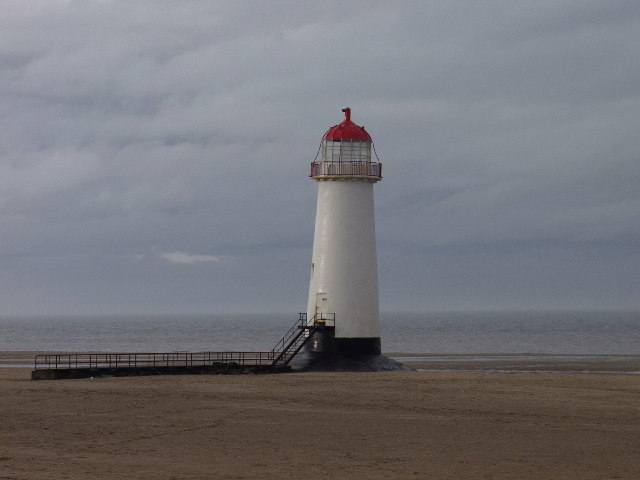
This is the most north-easterly point of Wales, on the western side of the Dee Estuary. The lighthouse was built in 1776 to warn ships approaching and leaving the port of Liverpool not to stray on to the sandbanks that stretch for miles into Liverpool Bay. It stands on the beach at Talacre and can be reached on foot at low tide. The building has not been used as a lighthouse since 1883 but the structure has been kept in good repair down to the present day.

Many people have reported odd sensations and sightings in the vicinity of the lighthouse, with some complaining of feeling unwell but recovering when they have left the area. There have also been sightings of a keeper on the walkway round the top of the tower. There is a story that a man named Raymond died there of a broken heart and that it is his sprit that troubles visitors.

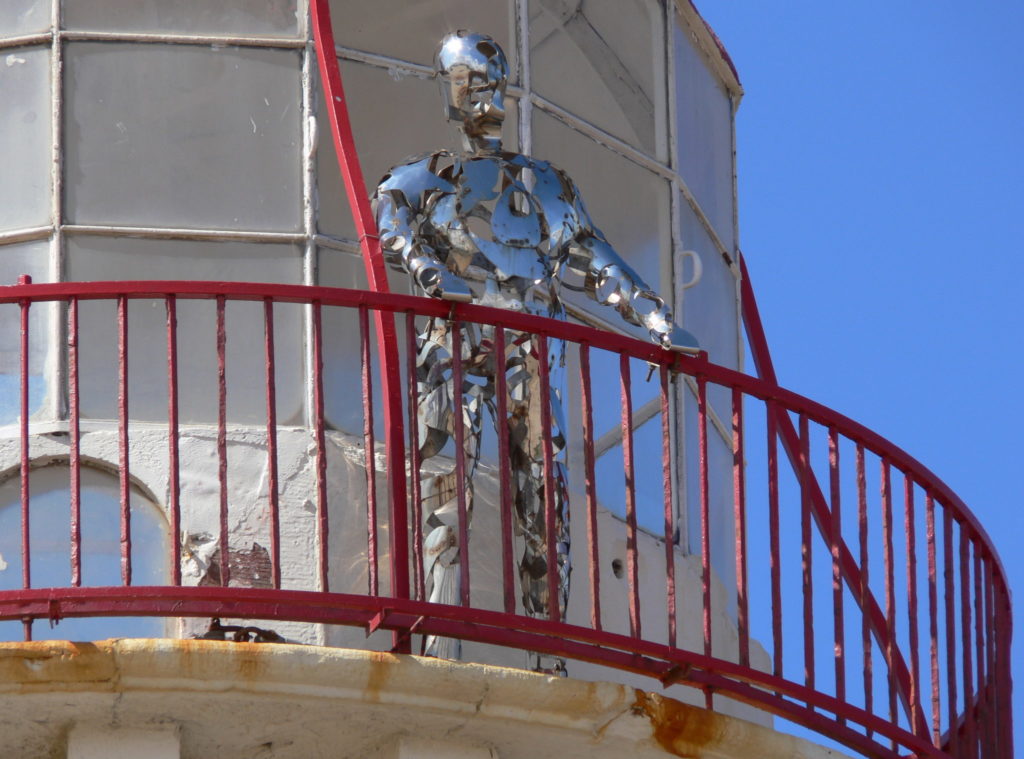
There has been a “keeper” permanently on duty at the top of the lighthouse since 2010. This is a 7-foot-high metal sculpture created by Angela Smith, a local artist. She used many pieces of high-grade polished steel to build the figure, thus allowing the wind the whistle through his ribs and create all the eerie sounds one might want to hear!


Ship John Shoal


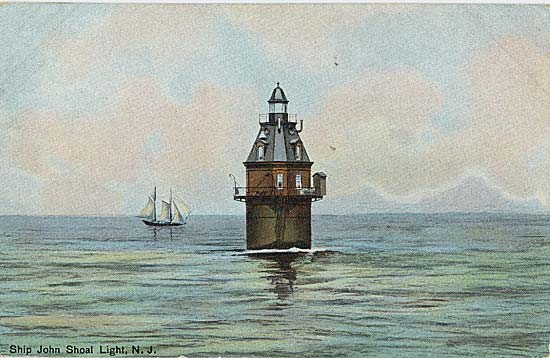
The shoal is in the upper reaches of Delaware Bay, on the New Jersey side of the border with Delaware. It is so named after the “John”, a ship that ran aground there on Christmas Eve 1797, thankfully with no loss of life or cargo. It was decided in 1850 that a lighthouse was needed on the shoal, but it was not completed until 1877.

The problem with the lighthouse was an apparent curse that affected anyone who stayed there for any length of time. The problem began in the 1880s and persisted for many years, with many keepers falling ill or even becoming paralysed. However, the “curse” turned out to have a cause that was far from supernatural – the lead-based red paint used on the structure had seeped into the rainwater tanks and poisoned the drinking water.

© John Welford

The Worm Charming World Championships


You may not think of worms as being particularly charming, but you can become a world champion worm charmer if you get your technique right!

The Worm Charming World Championships

The Worm Charming World Championships have been held at a primary school in Willaston, a village in Cheshire, England, ever since 1980. (There are two villages in Cheshire with this name – the one in question is between Nantwich and Crewe). The idea was the brainchild of the then deputy headteacher, John Bailey, but is now run under the auspices of the International Federation of Charming Worms and Allied Pastimes (which include underwater Ludo and ice tiddlywinks).

So what exactly is worm charming, I hear you cry, loudly? It is the art and science of persuading earthworms to come to the surface by just about any means short of actually digging them up. You can use a garden fork, but only as a tool for charming.

Competitors are allocated a plot of turfed land and must collect as many worms as they can in a given time. The winner is the person with most worms in their bucket at the end of that time. Needless to say, the world championships are conducted under controlled conditions to ensure that nobody takes an unfair advantage.

How to charm your worms

The method used to charm worms is vibration. If the soil is shaken in one way or another, worms will respond by heading for the surface. They do this naturally when there is heavy rain, for example, because they cannot survive in saturated conditions; so anything that feels similar to raindrops falling on the surface will elicit the same response, given that worms are incapable of telling the difference.

The method most favoured is to plunge a garden fork 15 centimetres into the ground and vibrate it by hitting the handle with a piece of wood, an activity that is known locally as “twanging”. Some people reckon that the playing of music is an effective charming method, and this is allowed under the rules. However, no substances may be placed on the ground, including water.

How to compete

For the World Championships, each competitor works a three-metre-square plot, assigned by lot, and there is room for up to 144 entrants. At a given signal the entrants must go to their plots and have half an hour to gather as many worms as they can. One problem is that “vibrated” worms will not necessarily pop up in the same plot as that of the competitor, but that is just hard luck; you can only catch worms that appear in your plot.

A competitor is allowed an assistant, called a “gillie”, whose job is to pick up the worms.

No worms are harmed during the competition, being placed in damp peat in the competitor’s container prior to counting, and released in the evening after the local birds have roosted. This is good luck for the worms, but not so hot for the birds.

The trophy, in the shape of a golden worm, goes to the collector of the most worms and there is also a silver trophy for the heaviest worm. 

The current world record was set in 2009 when the winners charmed 567 worms in their half hour, and the heaviest worm on record was found in 2011; it weighed 12.08 grams.

An interesting aspect of the Championship is that it reveals how worm numbers can vary due to weather conditions. For example, the winner in the year following the 2009 world record could only find 43 worms. Even so, worm charming, in any year, demonstrates just how many worms there are in any given area and the vital role they play in turning the soil over and distributing nutrients.

As the photo shows, the event is hugely popular with young and old and is also a great fundraiser at five pounds an entry and one pound to watch. It is an idea that could be copied just about anywhere by community groups that want to organise a fun day out and raise a bit of cash in the process.
© John Welford
Monday, 26 March 2018

The ring finger


The fourth finger (if the thumb counts as the first!) is traditionally the finger on which engagement and wedding rings are worn. But why is this?

It comes from an ancient (and entirely erroneous) belief that a nerve runs from this finger directly to the heart. Given that the heart has always been renowned as the seat of love – hence “giving your heart” and having “heart-felt emotions” – the link to the rings that signified love was appropriate enough.

This idea is also the reason why the finger has been called the “medical finger”. The Greeks and Romans reckoned that the nerve mentioned above would “warn the heart” if the finger came into contact with anything noxious, so the finger was used to stir medical concoctions. Presumably, if your heart jumped a beat during this process you would stop stirring and re-constitute your mixture so that it would be less likely to kill the patient!

Despite the complete lack of evidence for this belief, some people still maintain the superstition that it is unlucky to rub in ointment or scratch the skin with any finger other than the fourth.


© John Welford

Sunday, 25 March 2018

The highest mountain is not the tallest


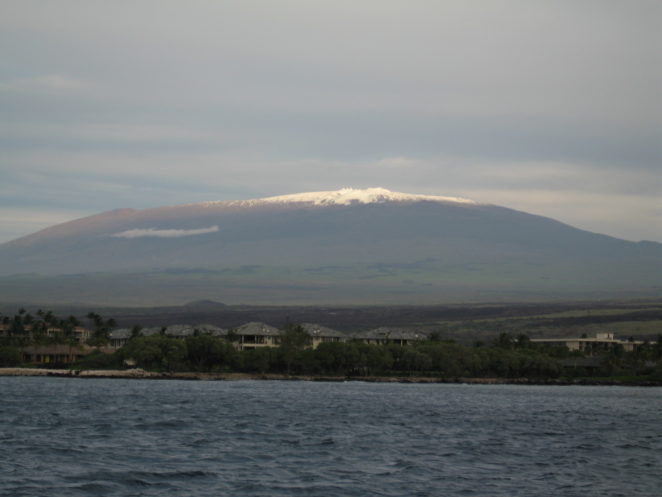
The highest mountain in the world? That has to be Mount Everest, surely? Well, yes … if measured from height above sea level. But if you specify tallest rather than highest, thus implying that sea level has nothing to do with it, then the winner – very easily – is Hawaii’s Mauna Kea.

Mauna Kea is a volcano that started life on the seabed of the Pacific Ocean and had already reached a height of 6,000 metres (20,000 feet) when it broke the surface. Its upward progression since then has “only” been 4,200 metres (13,800) feet, which sounds puny when set aside Mount Everest’s 8,900 metres (29,000 feet), but if both the sub-surface and above-surface heights of Mauna Lea are allowed as measurements of its height when added together, the volcano out-performs the mountain by about three-quarters of a mile!

It all depends on perspective. Many people would say that Tanzania’s Mount Kilimanjaro (5,900 metres, 19,300 feet) is more impressive that Mount Everest because it rises above a flat surface, whereas Everest is surrounded by the many other high peaks of the Himalayas.

On the other hand, if you were to measure the heights of points on the Earth’s surface by their distance from the centre of the planet, that would throw all the records out of joint because Earth is not a perfect sphere and the Equator is about 13 miles further from the planetary centre than the Poles. By that reckoning, the coast of Ecuador is higher than the Himalayas!

© John Welford

The ghost of Pawleys Island


Who is the “grey man” ghost of Pawleys Island? Opinion has long been divided on this issue, and deciding the matter is not helped by the fact that the ghost has no face and cannot therefore be identified with any certainty. However, there have been many people over the years who have claimed to see it, although this only happens when a dangerous storm such as a hurricane is on the way.

Pawleys Island is a long, low-lying island, formed from a sandbar, off the coast of South Carolina (United States). It encloses a narrow tidal lagoon and is occupied by housing along its entire length of three miles, with each property having access to the dunes and beach via its own boardwalk.

The island takes its name from the first white settler, Percival Pawley, who discovered in the early 18th century that this was a good place to get away from the mosquitos that made life difficult during the summer in the steamy lagoons of the Carolina coast.

One theory is that the ghost is Percival himself, but there are some much more entertaining stories involving blighted love and tragic death.

One such involves a young woman in the 1820s who eagerly awaited the arrival of her fiancé at her family home on the island. However, as he rode on his way to meet her he decided to challenge some other horsemen to a race. He thought he saw a shortcut through the marsh that led to the island but this only led to a quagmire into which he fell and was dragged into the mud from which he could not be rescued.

The young woman was driven mad by her distress, saying that she could see a ghostly image of the dead man, and had eventually to be taken to Charleston to seek medical help. After she and her family had left the island for this purpose, a hurricane blew up and destroyed every house apart from theirs.

This story has given rise to the notion that seeing the ghost is both good and bad news – a hurricane is on the way but your house will be spared.

Another story concerns a beautiful woman from Charleston who wanted to marry her cousin against the wishes of her family. They arranged for the undesirable suitor to be sent to France and later told the woman that he had been killed in a duel. She had no choice but to accept what she had been told, married another man and set up home on Pawleys Island.

One night, when her husband was away on business, a terrible storm blew up and a ship was wrecked on the island. There was only one survivor, who made his way ashore and sought refuge at the first house he came across, which was the woman’s. As is always the case in such stories, the man turned out to be the supposed-dead cousin. She was horrified to see who it was, and to realise that she had been tricked into marrying the wrong man, and the cousin reacted badly to seeing that she had a ring on her finger and - as he supposed – had not waited for his return but instead married someone else.

He ran from the house and promptly died of a broken heart, and she was troubled by his faceless ghost for the rest of her life.

So which story do you believe, if any? The fact remains that people on Pawleys Island claim to have seen the ghost at intervals down the years, and that the grey man has saved many lives by warning residents that a hurricane is on the way.

© John Welford

Saturday, 24 March 2018

The exception that proves the rule


“It’s the exception that proves the rule” is something that you often hear said when an objection is raised to a “rule” being broken. Person A believes in the rule but person B has their doubts and mentions a circumstance that simply does not fit the rule. Person A then sweeps back with the classic line, as though that settles the matter.

But does it? On the face of it, this statement is complete nonsense. In logic, a proposition of the type “All items of type X possess quality Y” is rendered invalid if just one example of X is found that does not have quality Y. You cannot say that all swans are white if somebody manages to find one that is black. However, according to our Person A, that black swan exception would be the proof we needed that all swans are white! Surely, this nonsensical statement simply turns logic on its head.

In order to make sense of exceptions proving the rule, we have to look a bit more closely at what an “exception” is. In its original sense, it means a person or thing that lies outside the scope of the rule in question. If we take just about any rule, such as “Students cannot bring hot food into the library”, there are several implications as to what would be acceptable behaviour, including the possibility of bringing in cold food and that of having hot food in places other than the library (and there is also the suggestion that it would be OK if you are not a student, but I’m not so sure about that one!).

In other words, the rule works because there are “exceptional” circumstances where it does not apply, namely outside the library and if cold food is being brought in (and this is in fact the case at the university library where I work).

Exceptions prove rules because they define the scope of the rules, and if we use the word “exception” in that context and no other. However, there is every possibility that people will continue to misuse the word and spout utter nonsense as a consequence!

© John Welford