Showing posts with label hauntings. Show all posts

Thursday, 4 March 2021

McRaven House, a haunted house in Vicksburg, Mississippi


McRaven House, on Harrison Street, Vicksburg, Mississippi, played an important role during the American Civil War and also features on lists of notorious “haunted houses”.

When General Grant captured Vicksburg in 1863 he established the Union headquarters at McRaven House, from where he was able to direct operations concerned with control of the Mississippi River. Stationed at the house were Colonel Wilson and his aide, Captain McPherson. McPherson’s role was to liaise between the occupying troops and the residents of the town.

One night, MacPherson did not return from his usual tour of the vicinity and was declared to be missing. On the following night, so it is said, the mutilated apparition of Captain MacPherson, dripping with blood, appeared to Colonel Wilson and told him that he had been murdered by Confederate sympathisers and his body thrown into the river.

Since that time, the ghost of Captain McPherson has continued to appear to occupants of McRaven House, each time telling them the same story.

McPherson’s ghost is not the only one to have been seen. Other Civil War soldiers and a woman with long brown hair have also been reported.

Despite the building being blessed by a priest in 1991, ghostly sightings have continued at McRaven House, which has become a popular tourist destination.

© John Welford

Friday, 30 October 2020

Nell Crook and the Dark Entry of Canterbury Cathedral


The Dark Entry is a passage that runs between Canterbury Cathedral’s Green Court and the old infirmary cloister, passing underneath the building known as the Prior’s Lodging. It is reputedly haunted by the ghost of Nell Crook, who lived and died during the reign of King Henry VIII in the 16th century.

A servant of a canon of the cathedral, she discovered that her employer was having an affair with his niece. Out of jealousy, she killed them both by serving them with a poisoned pie. Her crime was uncovered and her fate was to be buried alive beneath the pavement of the Dark Entry.

Her ghost has haunted the passageway ever since, particularly on Friday nights! It is advisable to avoid the Dark Entry at these times, given that seeing Nell’s ghost will bring about one’s own death, or so it is said.

The story is one of many told by the Rev R H Barham (1788-1845), writing as Thomas Ingoldsby in The Ingoldsby Legends, which first appeared in 1837. These were macabre, satirical and witty tales, mainly in verse, that continued the fashion for horror and mystery that was current in the early 19th century, but in a form that was suitable for children.

So did Nell Crook ever really exist, or was she merely an invention on the part of Rev Barham? Who knows?

© John Welford

Thursday, 1 August 2019

The haunting of Yorkshire Jack


The tragic tale of how a sailor known as Yorkshire Jack was hounded to his death began when the woman he loved was hanged for murder. 

This took place early in the 19th century in the Mount’s Bay area of Cornwall. This is just to the east of Penzance, the Bay taking its name from the island of St Michael’s Mount that is its most prominent feature. 

A man named Polgrain had taken a wife who was much younger than himself. This was Sarah, who grew tired of her husband and took a lover of her own age, this being Yorkshire Jack. She decided to murder Mr Polgrain and nearly got away with it. 

After the death certificate was signed with “natural causes” given as the reason for death, rumours started to spread after Jack moved into Sarah’s house. So many people reckoned that there had been foul play that Polgrain’s body was eventually exhumed and found to be full of arsenic. 

Sarah was tried, found guilty of murder and sentenced to hang, which in those days was done in public.
Sarah asked that Jack could accompany her on to the scaffold, and as the noose was placed around her neck she kissed Jack and was heard to say “You will – you promise you will?” to which Jack replied “I will, Sarah, I will”. 

After the execution there are reports that Sarah’s ghost had been seen in the locality, at places which she and Jack had frequented. 

The person who saw Sarah’s ghost more than anyone else was Yorkshire Jack, whose character changed completely in the months after the hanging. He became morose and short-tempered, with a habit of constantly looking over his shoulder. 

Jack went back to sea, but Sarah would not leave him alone even there. He proved to be a difficult shipmate, especially when his fellow sailors also felt that there was an extra person on board whom they were unable to see. 

When Jack’s ship came back to Mount’s Bay he told his shipmates that Sarah had made him promise on the scaffold that he would marry her at midnight that day. He had agreed, thinking to comfort her in her last moments, but he had not imagined that she would try to bind him to that promise after she was dead. He now realized that she wanted to be bound to him in death because she could not do so when alive. 

At midnight on the day that Jack had told this tale, the shipmates heard a light tap-tap of feet in high-heeled shoes. They followed the footsteps to where Jack lay in his hammock with a look of terror on his face. He got up and proceeded to the ship’s foredeck, followed by the footsteps. 

Jack then jumped overboard, never to be seen again. The shipmates said that they could hear the sound of church bells, as if chiming for a wedding. 

In later years people claimed they could hear wedding bells out at sea on Mount’s Bay, together with a ghostly voice saying “I will” before it was lost on the wind. 

Is this a story you can believe?

© John Welford

Tuesday, 27 March 2018

Two lighthouses - haunted or cursed


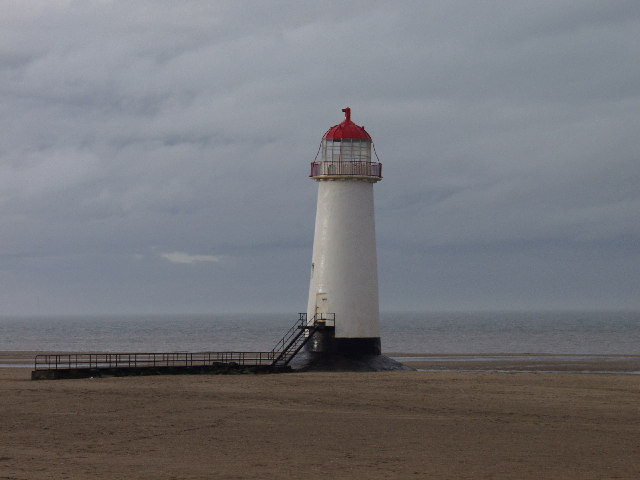
Lighthouses, especially abandoned ones, are often cited as buildings that are subject to ghostly goings-on. This is hardly surprising given that they stand as isolated towers in remote locations where they are battered by waves and winds. There are many stories of lighthouse keepers who have disappeared without trace, or been murdered by colleagues who had lost their minds as a result of having to live in a virtual prison for months on end. The Point of Ayr lighthouse, in North Wales, is reputed to be one such haunted lighthouse.


Point of Ayr


This is the most north-easterly point of Wales, on the western side of the Dee Estuary. The lighthouse was built in 1776 to warn ships approaching and leaving the port of Liverpool not to stray on to the sandbanks that stretch for miles into Liverpool Bay. It stands on the beach at Talacre and can be reached on foot at low tide. The building has not been used as a lighthouse since 1883 but the structure has been kept in good repair down to the present day.

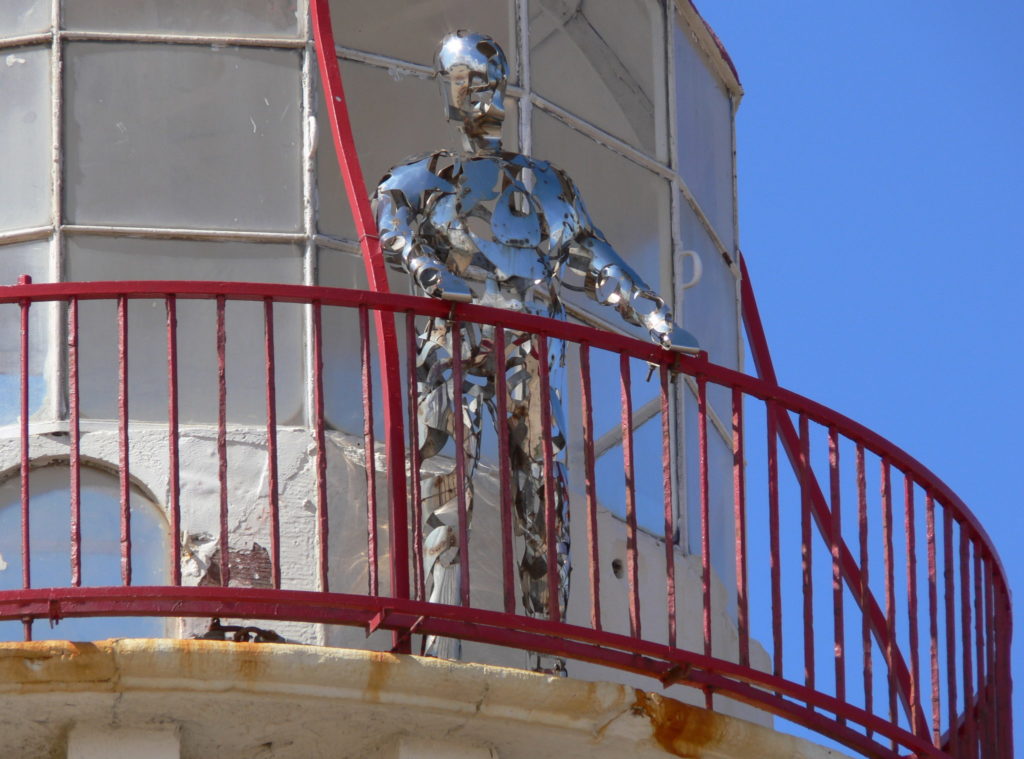
Many people have reported odd sensations and sightings in the vicinity of the lighthouse, with some complaining of feeling unwell but recovering when they have left the area. There have also been sightings of a keeper on the walkway round the top of the tower. There is a story that a man named Raymond died there of a broken heart and that it is his sprit that troubles visitors.

There has been a “keeper” permanently on duty at the top of the lighthouse since 2010. This is a 7-foot-high metal sculpture created by Angela Smith, a local artist. She used many pieces of high-grade polished steel to build the figure, thus allowing the wind the whistle through his ribs and create all the eerie sounds one might want to hear!


Ship John Shoal


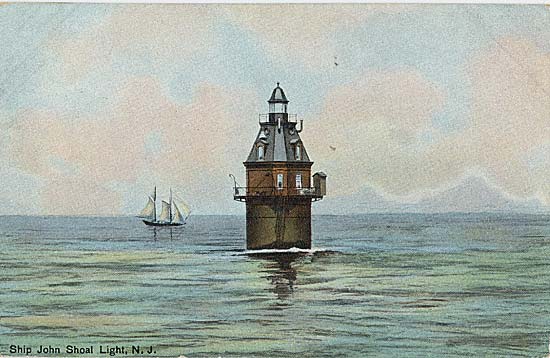
The shoal is in the upper reaches of Delaware Bay, on the New Jersey side of the border with Delaware. It is so named after the “John”, a ship that ran aground there on Christmas Eve 1797, thankfully with no loss of life or cargo. It was decided in 1850 that a lighthouse was needed on the shoal, but it was not completed until 1877.

The problem with the lighthouse was an apparent curse that affected anyone who stayed there for any length of time. The problem began in the 1880s and persisted for many years, with many keepers falling ill or even becoming paralysed. However, the “curse” turned out to have a cause that was far from supernatural – the lead-based red paint used on the structure had seeped into the rainwater tanks and poisoned the drinking water.

© John Welford

Wednesday, 31 August 2016

The ghost of the Hotel del Coronado


The Hotel del Coronado is a resort hotel near San Diego, California, that is said to be haunted by a woman who died there in November 1893.

The Coronado ghost 

The woman was Kate Morgan, although there are different stories to account for how she met her end. One is that she checked into the hotel alone, under a false name, after she and her husband, named Tom, had quarrelled during their journey there by train. She had told him that she was pregnant, which was not welcome news to him. He got off the train early and said that he would join her later.

After two days alone, staying in Room 3312, she went to San Diego where she bought a gun; she was found dead the following day on the north steps of the hotel, apparently by suicide.

However, there was something very strange about her death, which was that the gun she had bought, and which was in her hand with one chamber empty, was not of the same calibre as the bullet that killed her.

Another mystery concerned the maid who disappeared the day after the funeral and was never seen again. So did Kate’s husband Tom turn up at the hotel and kill both Kate and the maid, who had seen enough to implicate him in the murder?

Another account has Kate committing suicide because she found her husband with another woman. In this version the married couple had arrived together and booked into Room 3502. He went down to the gaming room on his own and Kate later decided that this would be a good time to surprise him with the news of her pregnancy. He had not thought that he would be disturbed by Kate turning up, hence the discovery of his flirting so shocked Kate that she killed herself.

As with many such stories there are elements that don’t really hold water, but the hotel seems to have done all it can to boost the stories for what they are worth. For one thing, there are two rooms, not one, that guests can sleep in that might produce odd sensations – and, naturally enough, they duly oblige with stories of mysterious presences, cold gusts and subdued whispers. Then there are the two possible scenes of the drama, namely the hotel steps and the gaming room, either of which are worthy of attention from the ghost-hunting perspective.

In addition to the sensations mentioned above, guests have reported seeing the ghost of Kate Morgan moving through corridors or standing by windows.

Many haunted houses increase their attractiveness by being the scene of hauntings by numerous ghosts. The Hotel del Coronado has achieved this trick by splitting their one ghost into two, which sounds like an excellent marketing ploy!


© John Welford

Thursday, 19 May 2016

Point of Ayr: a haunted lighthouse


Lighthouses, especially abandoned ones, are often cited as buildings that are subject to ghostly goings-on. This is hardly surprising given that they stand as isolated towers in remote locations where they are battered by waves and winds. There are many stories of lighthouse keepers who have disappeared without trace, or been murdered by colleagues who had lost their minds as a result of having to live in a virtual prison for months on end. The Point of Ayr lighthouse, in North Wales, is reputed to be one such haunted lighthouse.


Point of Ayr

This is the most north-easterly point of Wales, on the western side of the Dee Estuary. The lighthouse was built in 1776 to warn ships approaching and leaving the port of Liverpool not to stray on to the sandbanks that stretch for miles into Liverpool Bay. It stands on the beach at Talacre and can be reached on foot at low tide. The building has not been used as a lighthouse since 1883 but the structure has been kept in good repair down to the present day.

Many people have reported odd sensations and sightings in the vicinity of the lighthouse, with some complaining of feeling unwell but recovering when they have left the area. There have also been sightings of a keeper on the walkway round the top of the tower. There is a story that a man named Raymond died there of a broken heart and that it is his sprit that troubles visitors.

There has been a “keeper” permanently on duty at the top of the lighthouse since 2010. This is a 7-foot-high metal sculpture created by Angela Smith, a local artist. She used many pieces of high-grade polished steel to build the figure, thus allowing the wind the whistle through his ribs and create all the eerie sounds one might want to hear!


© John Welford

Tuesday, 15 March 2016

The ghosts of Fort Monroe


Ghost-hunters might have an interesting time at Fort Monroe, with a few celebrity ghosts for good measure!

Fort Monroe is a six-sided enclosure, within a moat, on a peninsula overlooking Chesapeake Bay in Virginia, USA. It covers a huge area (more than 500 acres) and contains more than 150 buildings, many of them of historical interest. It has been associated with several ghostly sightings, some of them being of well-known people who have been incarcerated there.

One of these was Jefferson Davis, the President of the Confederate States who was taken to Fort Monroe in shackles in 1865 after he had led the losing side in the American Civil War. His wife Varina later joined him and pleaded that, because his health was failing fast, he be allowed to die in peace in a private apartment rather than a prison cell. However, Davis survived the experience and lived for another 24 years. Despite not dying anywhere near Fort Monroe, the ghosts of both Jefferson Davis and his wife are said to haunt the fort, with Davis being seen in his former cell and Varina in the bedroom of a house that had a view of the prison block.

Another famous name associated with Fort Monroe is Edgar Allan Poe, who was there for four months in 1829 as part of his short military career before he became a full-time writer. Poe’s ghost is said to have been seen in the building that was his former barracks. Perhaps it is not coincidental that, during his time at Fort Monroe, Poe wrote “The Cask of Amontillado”, which is a story about a military man who is walled up in an empty stone building.

Another ghost is that of the “Light Lady”. This is Camille Kirtz. Her husband found her with her French lover on a lane within the fort. He shot at both of them, but although the lover escaped Camille was not so lucky and was killed. Her ghost wanders forever in a grove of oak trees as she searches for her lover.

Two ghost children have also been spotted, and it is believed by some people that they seek out real children to play with. The story goes that they died, either of disease or hunger, within the walls of Fort Monroe. One is seen in an upstairs room of a house next to the moat of the fort, while the other is in the basement of a house that belonged to a former soldier.

Whatever the truth of these stories, Fort Monroe is very much on the American ghost-hunter’s trail as a place of interest.


© John Welford

Sunday, 6 March 2016

The ghosts of the Myrtles Plantation


The Myrtles Plantation, some 70 miles north of New Orleans, was built in 1794 by David Bradford. It is reputed to be one of the most haunted places in North America, and it attracts a constant stream of people who hope to see a ghost or two!

The most famous ghost on offer is that of Chloe, a governess who was hanged in 1820 for the murder of the wife and children of her employer and lover. It is said that she roams the mansion at night and will lift the mosquito net off the bed of anyone who is sleeping there.

You might also come across the ghost of William Winter, who was the Plantation’s owner in the 1860s. He was shot one night while on the porch of the mansion and tried to stagger upstairs to reach his wife. There were 20 stairs but he only reached the 17th before collapsing and dying. His ghost can apparently be heard climbing the stairs, but never further than the 17th!

Then there are the two girls who peer through a window, a Voodoo princess, and a Confederate soldier …

There are stories of at least ten murders having taken place at the Myrtles Plantation, although only one can be reliably attested to. That does not matter, as long as the tourists keep turning up!


© John Welford

Thursday, 18 February 2016

The drummer of Tidworth


Poltergeist activity, which involves objects being moved around a room, doors suddenly opening and closing, etc, is a form of psychokinesis, which means the use of the mind to control matter. It used to be thought that evil spirits were responsible for such events, and these were often the ghosts of dead people who wanted to vent their anger on the people they had left behind. However, many psychic researchers now take the view that psychokinesis is just as likely to be the result of a living mind making strange things happen, quite possibly without the agent’s knowledge.

One example of a poltergeist created by a living person was the “drummer of Tidworth”. The story dates from 1661 when King Charles II was on the throne and belief in witchcraft was extremely strong, especially in rural areas.

The mysterious drummer

The drummer, whose name has been lost from the historical record, lived in the village of Ludgershall in Wiltshire. He practised his drum at all hours of the day and night and, not surprisingly, caused a great deal of unhappiness among his neighbours. He was arrested by John Mompesson, who lived in the nearby village of Tidworth, who also confiscated the drum.

However, this did not stop the drum from playing! Not only that, but drumming was heard to come from all over Mompesson’s house, inside and out. Other strange things happened, including objects being thrown around, candles floating across rooms, chamber pots being emptied on to beds, voices and footsteps being heard and the children of the family being levitated above their beds at night.

These phenomena went on for two years, giving Mompesson and his family no peace at all.

However, when the drummer was arrested for theft and sent away to Gloucester jail, the drumming, and the accompanying events, came to a halt. While he was in jail he claimed that he had caused all the problems for John Mompesson, which was a foolish thing to do because he was then put on trial for witchcraft. Despite being found guilty his punishment was relatively mild, namely to be exiled from his home area.

Many years later the drummer was released from his sentence and allowed to return to Ludgershall, although he did not settle there. The poltergeist activity started up again whenever the drummer was in the area but disappeared when he was not.

An explanation?

Although the drummer said that he was responsible for the happenings in the Mompesson house, there is no evidence to suggest that he was directing what went on. If the psychic researchers are to be believed, it only took the drummer’s presence, together with his abiding anger, to make everything kick off at the house in Tidworth.


© John Welford

Monday, 8 February 2016

The ghosts of Berry Pomeroy Castle


Berry Pomeroy Castle in Devon has more than its fair share of ghosts to alarm the unwary visitor!

Berry Pomeroy is a village in South Devon, England, not far from the town of Totnes. The Pomeroys were a Norman family that “came over with the Conqueror” in 1066 and were granted lands in the area. However the castle was not built until the late 15th century. It was sold in 1547 to Edward Seymour, Duke of Somerset, and his son built a completely new four-storey manor house within the curtain wall of the original castle. This manor house was later abandoned by his descendants and fell into ruin.

Stories of hauntings have been told for hundreds of years and seem to be associated mainly with the original owners, the Pomeroys.

The White Lady is believed to be the ghost of Margaret Pomeroy. She haunts the dungeons, where it is said that she was imprisoned by her sister Eleanor. Margaret was the more beautiful of the sisters and had no trouble in attracting men. Eleanor’s jealousy reached such a pitch that she threw her sister into the dungeon where she slowly starved to death.

The Blue Lady roams the whole castle and has the nasty habit of beckoning people to follow her to her tower. The legend says that should anyone be taken in by this trick they will meet their death by falling from the top of the tower.

The Blue Lady is supposed to date from an earlier period than the White Lady and to have been the daughter of one of the early Pomeroys from Norman times. However, this seems unlikely as it has been proved by archaeology that, although they owned the land, the first Pomeroys did not build anything on this site.

The story goes that the Blue Lady was raped by her father who then strangled the baby that she bore, although another version states that it was she who killed the baby. Whichever version is true (assuming that either of them is!) a sight of the Blue Lady is supposed to be a harbinger of death, and not necessarily by falling from her tower.

A 19th century doctor is supposed to have seen the Blue Lady during a visit to the castle to treat the wife of a steward. Although she seemed to be making a full recovery, she died soon after the doctor had left. The viewing of the ghost sounds rather like a convenient excuse for administering the wrong drugs and causing the death of one’s patient!

Just for good measure, Berry Pomeroy Castle also boasts a Grey Lady, a cavalier, and strange shadows that have nothing solid to cast them.


© John Welford

Saturday, 6 February 2016

Borley Rectory, "the most haunted house in England"


Borley Rectory was once famous (or notorious) for being “the most haunted house in England”. During the years of its greatest fame, namely the period from 1929 to 1938, it was certainly much haunted by psychical researchers, but whether anything more other-worldly ever happened there is a matter for considerable doubt and conjecture.


Borley Rectory

The rectory was built in 1863 to accommodate the Reverend Henry Bull, the rector of Borley near Sudbury in Suffolk (although Borley is just over the border in Essex). The house was later expanded as his family grew – Rev and Mrs Bull eventually had 14 children.

Nothing untoward was noticed at the Rectory until 1900, when Ethel Bull, one of the daughters, reported seeing the ghostly figure of a nun in the garden. This seemed to tie in with a local legend to the effect that the rectory site had been that of a monastery in the 13th century, and that there had a been a nunnery not far away. A monk and a nun had supposedly fallen in love and had been killed before they could elope.

The natural conclusion to draw is that Ethel had heard the story and become so convinced by it that she imagined seeing the ghostly nun. Ethel lived to the age of 93 and always maintained that the ghost was real, but, again, that is not the most convincing reason for believing the story to be true. Indeed, research has shown that there was never a monastery at Borley, so the original story could not have been true.


Harry Price investigates

In 1929 the psychical researcher Harry Price became interested in the Rectory, not least because the then incumbents, Rev and Mrs G E Smith, had reported (according to Price) all sorts of strange goings-on in the house, including odd sounds and smells, objects being moved, bells being rung, writing appearing on walls, doors slamming, and fires starting without warning.

Harry Price held a séance, in which the spirit causing all these phenomena turned out, according to the medium conducting the séance, to be Reverend Bull!

The Smiths moved out of the Rectory, to be replaced by the Reverend Lionel Foyster and his wife Marianne. The poltergeist activity increased, as did Harry Price’s investigations.

When the Foysters could stand it no longer (either the phenomena, or Price’s constant presence, or both), they abandoned the Rectory and Harry Price leased the house himself. He invited a whole team of researchers to spend nights in the house and record their observations, as well as making plenty of his own notes.

Harry Price summed up his findings and conclusions in a book, “The Most Haunted House in England”, published in 1940. What he wrote convinced a great many people at the time, and the house’s reputation entered the public consciousness.


The aftermath

The rectory burned down in 1946, with reports that a ghostly figure was seen at an upstairs window. Whether the fire was started deliberately or accidentally is a matter for debate. When bones were found buried underneath the house, this added more “evidence” to the side of the argument that claimed the hauntings to be genuine. However, whether the bones were human, as opposed to those of farm animals, has never been established.

Harry Price died in 1948 and left his huge collection of books and documents to the University of London Library. The current writer worked for a short time at the library in 1974-5 and became familiar with the Harry Price collection – indeed the copy of “The Most Haunted House in England” that I read was Harry Price’s own copy. However, what most impressed me about the Harry Price collection was the large number of books it contained on subjects such as conjuring and magic tricks, as well as more esoteric material on witchcraft and the occult. Therein lies an important clue to the whole Borley Rectory story.

Harry Price was a trickster who had begun his professional life by exposing the tricks used by others. As well as using some genuine scientific methods to investigate strange phenomena, such as measuring temperature changes and photographing evidence, there is every reason to think that many of the incidents were faked, being little more than conjuring tricks, and that purely natural events were given a significance they did not deserve.

For example, Price’s team of 40 investigators mostly comprised known mediums and students. The reputation of a medium depends on their being able to detect spirit presences, so they are hardly likely to say that they have not done so when given such a golden opportunity. As for the students, it is much more fun to say that something weird has happened than that it has not.

One of the most damning pieces of evidence against Price is that, while an independent investigator was being shown round the house, having been told that things got thrown around for no apparent reason, he was hit on the head by a pebble. Harry Price’s pockets were later found to be full of pebbles.

Another reason for doubting Price’s claims was that Mrs Smith declared in 1949 that, far from what Price had written in his book, the phenomena he reported had only begun after he turned up at the Rectory and not before.

The Borley Rectory saga is therefore one of a story getting out of hand. Harry Price, who had absolutely no qualifications for the job and lacked any scientific training, was desperate for recognition as a genuine psychical researcher. He needed an opportunity to prove himself, and Borley Rectory was that opportunity. He knew the sort of evidence that should be present in a genuinely haunted house and was fully capable of producing it, which he did.

© John Welford