Showing posts with label ghosts. Show all posts

Friday, 19 March 2021

The ghostly drummer of Hickling Broad


Potter Heigham is a small village in Norfolk, not far from Hickling Broad. In the winter before the battle of Waterloo in 1815, a drummer boy, home on leave, fell in love with a girl from the village.

Though she returned his love, her father refused to accept a soldier as a son-in-law and the two were compelled to meet secretly at a place called Swim Coots, close to the Broad. Every evening the drummer boy would skate across the ice-covered Broad to meet her, but one night the ice gave way and he fell into the Broad and drowned.

However, his ghost still skated across the ice to meet his sweetheart. It is said that, at 7 o’clock on a misty February evening, the role of a drum can be heard across the Broad as the phantom skater appears through the gloom, beating a tattoo as he tries to summon his long lost love.

© John Welford

Friday, 30 October 2020

Nell Crook and the Dark Entry of Canterbury Cathedral


The Dark Entry is a passage that runs between Canterbury Cathedral’s Green Court and the old infirmary cloister, passing underneath the building known as the Prior’s Lodging. It is reputedly haunted by the ghost of Nell Crook, who lived and died during the reign of King Henry VIII in the 16th century.

A servant of a canon of the cathedral, she discovered that her employer was having an affair with his niece. Out of jealousy, she killed them both by serving them with a poisoned pie. Her crime was uncovered and her fate was to be buried alive beneath the pavement of the Dark Entry.

Her ghost has haunted the passageway ever since, particularly on Friday nights! It is advisable to avoid the Dark Entry at these times, given that seeing Nell’s ghost will bring about one’s own death, or so it is said.

The story is one of many told by the Rev R H Barham (1788-1845), writing as Thomas Ingoldsby in The Ingoldsby Legends, which first appeared in 1837. These were macabre, satirical and witty tales, mainly in verse, that continued the fashion for horror and mystery that was current in the early 19th century, but in a form that was suitable for children.

So did Nell Crook ever really exist, or was she merely an invention on the part of Rev Barham? Who knows?

© John Welford

Monday, 30 December 2019

How myths evolve: the example of Lord Dufferin


Myths are extremely powerful. They have given rise to most of the world’s religions and have thus played a massive role in the history of every country on the planet. But when it comes to determining how close the myth is to truth, huge difficulties arise. In one sense, this does not matter – what is important is how many people believe the myth to be true or are unwilling to dig too deeply in case their prejudices prove to be ill-founded.

An example of how a myth can arise and be widely accepted, but can also be seen to be based largely on fantasy, is the story of Lord Dufferin and his apparent saving from a terrible death.

Lord Dufferin was a British diplomat who – so the story goes – was having a break in 1883 at a country house in Ireland. One night he heard a noise outside and went to investigate. He saw a man staggering across the lawn as he carried what turned out to be a coffin. The man’s face was contorted with hate and utterly loathsome. Lord Dufferin stepped forward to confront the man and walked right through him, after which the man and the coffin disappeared.

When Lord Dufferin told the people who lived at the house what had happened, none of them could give him a clue as to what he might have seen. There were no local ghosts who fitted the bill, and the man’s description meant nothing to anyone.

The story now moved on ten years, to when Lord Dufferin was British Ambassador to France. He attended a reception at a hotel in Paris, where the main event took place on the top floor and nearly everyone used a lift to get there from the entrance hall.

Lord Dufferin and his secretary joined the queue for the lift and eventually reached the head of it. However, when the lift doors opened, Lord Dufferin was horrified to see that the lift operator was the same man that he had seen carrying a coffin across an Irish lawn, ten years before. He refused to get into the lift and pulled his secretary back as well. The crowded lift ascended but, when nearly at the top, the cables broke and the lift plunged all the down, killing everyone on board, including the lift attendant.

Lord Dufferin tried to find out who the lift attendant was, but nobody knew. The hotel had only employed him as a casual worker, and nobody ever came forward to claim the body.

And so the tale stood, as a classic ghost story involving a ghastly apparition that saved a man’s life. Although the lift accident was in 1893, it was not until 1920 that an account appeared in print. It was included in a paper written a French psychologist named De Maratray and then in a book entitled “Death and its Mystery” by a French astronomer named Flammarion.

So it must have been a true story, then?

Neither De Maratray nor Flammarion had checked their facts. Had they done so, they would have discovered that the lift accident had actually occurred in 1878, which was five years before Lord Dufferin’s supposed Irish vision. The accident had nothing to do with a diplomatic reception, and Lord Dufferin was in Canada at the time!

It appears that a similar story was first told in 1892, involving a woman who had a dream in which a hearse stopped outside her house and she was asked by its driver “Are you not ready yet?”. This question was asked by a lift attendant when she paused as she was about to enter, which she then refused to do. As you might expect, the lift crashed and the man was killed.

This story was told by another unreliable raconteur but that did not stop it doing the rounds and growing in the telling.

One variation was regularly told by a certain Lord Dufferin, who knew full well that he had nothing to do with it. He told it to an impressionable young nephew, but put himself into the story. The nephew believed everything he heard, having no reason to doubt his uncle’s story. He grew up to be a well-known writer, his name being Harold Nicholson.

Nicholson also passed the story on, with Lord Dufferin as the main character, and one of the people who heard Nicholson’s version was De Maratray, the French psychologist.

And so the myth was born. So many myths start in very similar fashion!


© John Welford

Thursday, 1 August 2019

The haunting of Yorkshire Jack


The tragic tale of how a sailor known as Yorkshire Jack was hounded to his death began when the woman he loved was hanged for murder. 

This took place early in the 19th century in the Mount’s Bay area of Cornwall. This is just to the east of Penzance, the Bay taking its name from the island of St Michael’s Mount that is its most prominent feature. 

A man named Polgrain had taken a wife who was much younger than himself. This was Sarah, who grew tired of her husband and took a lover of her own age, this being Yorkshire Jack. She decided to murder Mr Polgrain and nearly got away with it. 

After the death certificate was signed with “natural causes” given as the reason for death, rumours started to spread after Jack moved into Sarah’s house. So many people reckoned that there had been foul play that Polgrain’s body was eventually exhumed and found to be full of arsenic. 

Sarah was tried, found guilty of murder and sentenced to hang, which in those days was done in public.
Sarah asked that Jack could accompany her on to the scaffold, and as the noose was placed around her neck she kissed Jack and was heard to say “You will – you promise you will?” to which Jack replied “I will, Sarah, I will”. 

After the execution there are reports that Sarah’s ghost had been seen in the locality, at places which she and Jack had frequented. 

The person who saw Sarah’s ghost more than anyone else was Yorkshire Jack, whose character changed completely in the months after the hanging. He became morose and short-tempered, with a habit of constantly looking over his shoulder. 

Jack went back to sea, but Sarah would not leave him alone even there. He proved to be a difficult shipmate, especially when his fellow sailors also felt that there was an extra person on board whom they were unable to see. 

When Jack’s ship came back to Mount’s Bay he told his shipmates that Sarah had made him promise on the scaffold that he would marry her at midnight that day. He had agreed, thinking to comfort her in her last moments, but he had not imagined that she would try to bind him to that promise after she was dead. He now realized that she wanted to be bound to him in death because she could not do so when alive. 

At midnight on the day that Jack had told this tale, the shipmates heard a light tap-tap of feet in high-heeled shoes. They followed the footsteps to where Jack lay in his hammock with a look of terror on his face. He got up and proceeded to the ship’s foredeck, followed by the footsteps. 

Jack then jumped overboard, never to be seen again. The shipmates said that they could hear the sound of church bells, as if chiming for a wedding. 

In later years people claimed they could hear wedding bells out at sea on Mount’s Bay, together with a ghostly voice saying “I will” before it was lost on the wind. 

Is this a story you can believe?

© John Welford

Sunday, 25 March 2018

The ghost of Pawleys Island


Who is the “grey man” ghost of Pawleys Island? Opinion has long been divided on this issue, and deciding the matter is not helped by the fact that the ghost has no face and cannot therefore be identified with any certainty. However, there have been many people over the years who have claimed to see it, although this only happens when a dangerous storm such as a hurricane is on the way.

Pawleys Island is a long, low-lying island, formed from a sandbar, off the coast of South Carolina (United States). It encloses a narrow tidal lagoon and is occupied by housing along its entire length of three miles, with each property having access to the dunes and beach via its own boardwalk.

The island takes its name from the first white settler, Percival Pawley, who discovered in the early 18th century that this was a good place to get away from the mosquitos that made life difficult during the summer in the steamy lagoons of the Carolina coast.

One theory is that the ghost is Percival himself, but there are some much more entertaining stories involving blighted love and tragic death.

One such involves a young woman in the 1820s who eagerly awaited the arrival of her fiancé at her family home on the island. However, as he rode on his way to meet her he decided to challenge some other horsemen to a race. He thought he saw a shortcut through the marsh that led to the island but this only led to a quagmire into which he fell and was dragged into the mud from which he could not be rescued.

The young woman was driven mad by her distress, saying that she could see a ghostly image of the dead man, and had eventually to be taken to Charleston to seek medical help. After she and her family had left the island for this purpose, a hurricane blew up and destroyed every house apart from theirs.

This story has given rise to the notion that seeing the ghost is both good and bad news – a hurricane is on the way but your house will be spared.

Another story concerns a beautiful woman from Charleston who wanted to marry her cousin against the wishes of her family. They arranged for the undesirable suitor to be sent to France and later told the woman that he had been killed in a duel. She had no choice but to accept what she had been told, married another man and set up home on Pawleys Island.

One night, when her husband was away on business, a terrible storm blew up and a ship was wrecked on the island. There was only one survivor, who made his way ashore and sought refuge at the first house he came across, which was the woman’s. As is always the case in such stories, the man turned out to be the supposed-dead cousin. She was horrified to see who it was, and to realise that she had been tricked into marrying the wrong man, and the cousin reacted badly to seeing that she had a ring on her finger and - as he supposed – had not waited for his return but instead married someone else.

He ran from the house and promptly died of a broken heart, and she was troubled by his faceless ghost for the rest of her life.

So which story do you believe, if any? The fact remains that people on Pawleys Island claim to have seen the ghost at intervals down the years, and that the grey man has saved many lives by warning residents that a hurricane is on the way.

© John Welford

Wednesday, 31 August 2016

The ghost of the Hotel del Coronado


The Hotel del Coronado is a resort hotel near San Diego, California, that is said to be haunted by a woman who died there in November 1893.

The Coronado ghost 

The woman was Kate Morgan, although there are different stories to account for how she met her end. One is that she checked into the hotel alone, under a false name, after she and her husband, named Tom, had quarrelled during their journey there by train. She had told him that she was pregnant, which was not welcome news to him. He got off the train early and said that he would join her later.

After two days alone, staying in Room 3312, she went to San Diego where she bought a gun; she was found dead the following day on the north steps of the hotel, apparently by suicide.

However, there was something very strange about her death, which was that the gun she had bought, and which was in her hand with one chamber empty, was not of the same calibre as the bullet that killed her.

Another mystery concerned the maid who disappeared the day after the funeral and was never seen again. So did Kate’s husband Tom turn up at the hotel and kill both Kate and the maid, who had seen enough to implicate him in the murder?

Another account has Kate committing suicide because she found her husband with another woman. In this version the married couple had arrived together and booked into Room 3502. He went down to the gaming room on his own and Kate later decided that this would be a good time to surprise him with the news of her pregnancy. He had not thought that he would be disturbed by Kate turning up, hence the discovery of his flirting so shocked Kate that she killed herself.

As with many such stories there are elements that don’t really hold water, but the hotel seems to have done all it can to boost the stories for what they are worth. For one thing, there are two rooms, not one, that guests can sleep in that might produce odd sensations – and, naturally enough, they duly oblige with stories of mysterious presences, cold gusts and subdued whispers. Then there are the two possible scenes of the drama, namely the hotel steps and the gaming room, either of which are worthy of attention from the ghost-hunting perspective.

In addition to the sensations mentioned above, guests have reported seeing the ghost of Kate Morgan moving through corridors or standing by windows.

Many haunted houses increase their attractiveness by being the scene of hauntings by numerous ghosts. The Hotel del Coronado has achieved this trick by splitting their one ghost into two, which sounds like an excellent marketing ploy!


© John Welford

Tuesday, 15 March 2016

The ghosts of Fort Monroe


Ghost-hunters might have an interesting time at Fort Monroe, with a few celebrity ghosts for good measure!

Fort Monroe is a six-sided enclosure, within a moat, on a peninsula overlooking Chesapeake Bay in Virginia, USA. It covers a huge area (more than 500 acres) and contains more than 150 buildings, many of them of historical interest. It has been associated with several ghostly sightings, some of them being of well-known people who have been incarcerated there.

One of these was Jefferson Davis, the President of the Confederate States who was taken to Fort Monroe in shackles in 1865 after he had led the losing side in the American Civil War. His wife Varina later joined him and pleaded that, because his health was failing fast, he be allowed to die in peace in a private apartment rather than a prison cell. However, Davis survived the experience and lived for another 24 years. Despite not dying anywhere near Fort Monroe, the ghosts of both Jefferson Davis and his wife are said to haunt the fort, with Davis being seen in his former cell and Varina in the bedroom of a house that had a view of the prison block.

Another famous name associated with Fort Monroe is Edgar Allan Poe, who was there for four months in 1829 as part of his short military career before he became a full-time writer. Poe’s ghost is said to have been seen in the building that was his former barracks. Perhaps it is not coincidental that, during his time at Fort Monroe, Poe wrote “The Cask of Amontillado”, which is a story about a military man who is walled up in an empty stone building.

Another ghost is that of the “Light Lady”. This is Camille Kirtz. Her husband found her with her French lover on a lane within the fort. He shot at both of them, but although the lover escaped Camille was not so lucky and was killed. Her ghost wanders forever in a grove of oak trees as she searches for her lover.

Two ghost children have also been spotted, and it is believed by some people that they seek out real children to play with. The story goes that they died, either of disease or hunger, within the walls of Fort Monroe. One is seen in an upstairs room of a house next to the moat of the fort, while the other is in the basement of a house that belonged to a former soldier.

Whatever the truth of these stories, Fort Monroe is very much on the American ghost-hunter’s trail as a place of interest.


© John Welford

Sunday, 6 March 2016

The ghosts of the Myrtles Plantation


The Myrtles Plantation, some 70 miles north of New Orleans, was built in 1794 by David Bradford. It is reputed to be one of the most haunted places in North America, and it attracts a constant stream of people who hope to see a ghost or two!

The most famous ghost on offer is that of Chloe, a governess who was hanged in 1820 for the murder of the wife and children of her employer and lover. It is said that she roams the mansion at night and will lift the mosquito net off the bed of anyone who is sleeping there.

You might also come across the ghost of William Winter, who was the Plantation’s owner in the 1860s. He was shot one night while on the porch of the mansion and tried to stagger upstairs to reach his wife. There were 20 stairs but he only reached the 17th before collapsing and dying. His ghost can apparently be heard climbing the stairs, but never further than the 17th!

Then there are the two girls who peer through a window, a Voodoo princess, and a Confederate soldier …

There are stories of at least ten murders having taken place at the Myrtles Plantation, although only one can be reliably attested to. That does not matter, as long as the tourists keep turning up!


© John Welford

Thursday, 18 February 2016

The drummer of Tidworth


Poltergeist activity, which involves objects being moved around a room, doors suddenly opening and closing, etc, is a form of psychokinesis, which means the use of the mind to control matter. It used to be thought that evil spirits were responsible for such events, and these were often the ghosts of dead people who wanted to vent their anger on the people they had left behind. However, many psychic researchers now take the view that psychokinesis is just as likely to be the result of a living mind making strange things happen, quite possibly without the agent’s knowledge.

One example of a poltergeist created by a living person was the “drummer of Tidworth”. The story dates from 1661 when King Charles II was on the throne and belief in witchcraft was extremely strong, especially in rural areas.

The mysterious drummer

The drummer, whose name has been lost from the historical record, lived in the village of Ludgershall in Wiltshire. He practised his drum at all hours of the day and night and, not surprisingly, caused a great deal of unhappiness among his neighbours. He was arrested by John Mompesson, who lived in the nearby village of Tidworth, who also confiscated the drum.

However, this did not stop the drum from playing! Not only that, but drumming was heard to come from all over Mompesson’s house, inside and out. Other strange things happened, including objects being thrown around, candles floating across rooms, chamber pots being emptied on to beds, voices and footsteps being heard and the children of the family being levitated above their beds at night.

These phenomena went on for two years, giving Mompesson and his family no peace at all.

However, when the drummer was arrested for theft and sent away to Gloucester jail, the drumming, and the accompanying events, came to a halt. While he was in jail he claimed that he had caused all the problems for John Mompesson, which was a foolish thing to do because he was then put on trial for witchcraft. Despite being found guilty his punishment was relatively mild, namely to be exiled from his home area.

Many years later the drummer was released from his sentence and allowed to return to Ludgershall, although he did not settle there. The poltergeist activity started up again whenever the drummer was in the area but disappeared when he was not.

An explanation?

Although the drummer said that he was responsible for the happenings in the Mompesson house, there is no evidence to suggest that he was directing what went on. If the psychic researchers are to be believed, it only took the drummer’s presence, together with his abiding anger, to make everything kick off at the house in Tidworth.


© John Welford

Saturday, 13 February 2016

The Greenbriar ghost


Most ghost stories are just that – stories. However, when an account of ghostly visitation is used as evidence in court to convict a murderer, something very strange is happening. Read on!

The Greenbriar ghost

Zona Heaster was born in 1873 near Greenbriar, Virginia. In 1896 she met a blacksmith, who was new to the area, and fell in love with him. This was Edward (or Erasmus) Shue. Zona’s widowed mother, Mary Heaster,  took an instant dislike to him but could not prevent the pair from marrying, which they did on 26th October.

On 23rd January 1897 Edward Shue was at work when he asked an 11-year-old boy, Andy Jones, to go to the Shue house to see if Zona needed any help. When Andy opened the door he found Zona lying dead on the floor. Andy rushed back to summon Edward.

When the local doctor, George Knapp, arrived, he found that Edward Shue had dressed Zona in her Sunday best and was cradling her in his arms in a state of utter distress. Dr Knapp therefore found it impossible to examine the body. He assumed that Zona had died in childbirth.

However, Mary Heaster, Zona’s mother, was far from satisfied with this explanation. She was particularly suspicious of the fact that Edward Shue insisted that Zona’s body could not be seen without her favourite red scarf round her neck.

Mary then came up with the story that Zona’s ghost visited her one night and told her that she had had her neck broken by Edward who had flown into a violent rage because Zona had not cooked his supper properly. The ghost then spun her head round in a complete circle.

Mary insisted that the local prosecutor must order the body to be exhumed, and this was done on 22nd February. An autopsy revealed that Zona’s neck had indeed been broken, just as Mary claimed the ghost had told her. Edward Shue was arrested and tried for murder.

Despite all the evidence against him being circumstantial, Shue was found guilty and sentenced to life imprisonment. He died in 1900.

Was justice served?

It seems quite likely that Shue did kill Zona, but there were other possibilities. One suggestion has been that Mary had found her daughter dead and broke her neck in order to frame Edward.

At all events the jury at Edward Shue’s trial did seem to find convincing Mary Heaster’s evidence of being visited by Zona’s ghost, especially when Mary was able to state that the ghost had said that her neck had been “squeezed off at the first vertebra”. However, this does seem to betray remarkably detailed anatomical knowledge on the part of a simple countrywoman, and should lead us to wonder if the “ghost story” was an invention on Mary’s part, whatever role Edward might have played in Zona’s death.

For one thing, could Mary have seen the autopsy report at some stage before the trial? Another interesting point is that the “Greenbriar Independent” that carried the story of Zona’s death also contained a report of a case in Australia in which a ghost had been invoked as providing evidence of a murderer’s guilt. It would be a remarkable coincidence if Mary had come up with her story without having read about the Australian case in the same newspaper that reported her daughter’s death.

Either Edward Shue did kill Zona, and Mary made sure that he would be convicted, or Zona died of natural causes and Mary used the ghost story to frame Edward with her murder. In either scenario there are disturbing details that don’t quite add up. This is probably a case in which the truth will never be established to everyone’s satisfaction.

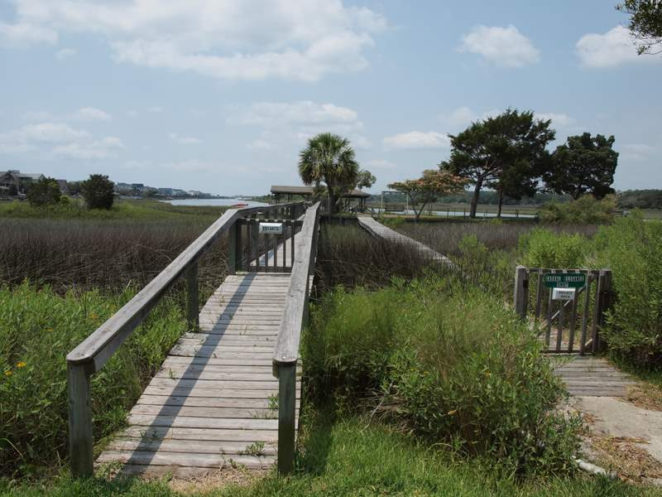
(The photo is of the Greenbriar River)


© John Welford

Monday, 8 February 2016

The ghosts of Berry Pomeroy Castle


Berry Pomeroy Castle in Devon has more than its fair share of ghosts to alarm the unwary visitor!

Berry Pomeroy is a village in South Devon, England, not far from the town of Totnes. The Pomeroys were a Norman family that “came over with the Conqueror” in 1066 and were granted lands in the area. However the castle was not built until the late 15th century. It was sold in 1547 to Edward Seymour, Duke of Somerset, and his son built a completely new four-storey manor house within the curtain wall of the original castle. This manor house was later abandoned by his descendants and fell into ruin.

Stories of hauntings have been told for hundreds of years and seem to be associated mainly with the original owners, the Pomeroys.

The White Lady is believed to be the ghost of Margaret Pomeroy. She haunts the dungeons, where it is said that she was imprisoned by her sister Eleanor. Margaret was the more beautiful of the sisters and had no trouble in attracting men. Eleanor’s jealousy reached such a pitch that she threw her sister into the dungeon where she slowly starved to death.

The Blue Lady roams the whole castle and has the nasty habit of beckoning people to follow her to her tower. The legend says that should anyone be taken in by this trick they will meet their death by falling from the top of the tower.

The Blue Lady is supposed to date from an earlier period than the White Lady and to have been the daughter of one of the early Pomeroys from Norman times. However, this seems unlikely as it has been proved by archaeology that, although they owned the land, the first Pomeroys did not build anything on this site.

The story goes that the Blue Lady was raped by her father who then strangled the baby that she bore, although another version states that it was she who killed the baby. Whichever version is true (assuming that either of them is!) a sight of the Blue Lady is supposed to be a harbinger of death, and not necessarily by falling from her tower.

A 19th century doctor is supposed to have seen the Blue Lady during a visit to the castle to treat the wife of a steward. Although she seemed to be making a full recovery, she died soon after the doctor had left. The viewing of the ghost sounds rather like a convenient excuse for administering the wrong drugs and causing the death of one’s patient!

Just for good measure, Berry Pomeroy Castle also boasts a Grey Lady, a cavalier, and strange shadows that have nothing solid to cast them.


© John Welford

Saturday, 6 February 2016

Borley Rectory, "the most haunted house in England"


Borley Rectory was once famous (or notorious) for being “the most haunted house in England”. During the years of its greatest fame, namely the period from 1929 to 1938, it was certainly much haunted by psychical researchers, but whether anything more other-worldly ever happened there is a matter for considerable doubt and conjecture.


Borley Rectory

The rectory was built in 1863 to accommodate the Reverend Henry Bull, the rector of Borley near Sudbury in Suffolk (although Borley is just over the border in Essex). The house was later expanded as his family grew – Rev and Mrs Bull eventually had 14 children.

Nothing untoward was noticed at the Rectory until 1900, when Ethel Bull, one of the daughters, reported seeing the ghostly figure of a nun in the garden. This seemed to tie in with a local legend to the effect that the rectory site had been that of a monastery in the 13th century, and that there had a been a nunnery not far away. A monk and a nun had supposedly fallen in love and had been killed before they could elope.

The natural conclusion to draw is that Ethel had heard the story and become so convinced by it that she imagined seeing the ghostly nun. Ethel lived to the age of 93 and always maintained that the ghost was real, but, again, that is not the most convincing reason for believing the story to be true. Indeed, research has shown that there was never a monastery at Borley, so the original story could not have been true.


Harry Price investigates

In 1929 the psychical researcher Harry Price became interested in the Rectory, not least because the then incumbents, Rev and Mrs G E Smith, had reported (according to Price) all sorts of strange goings-on in the house, including odd sounds and smells, objects being moved, bells being rung, writing appearing on walls, doors slamming, and fires starting without warning.

Harry Price held a séance, in which the spirit causing all these phenomena turned out, according to the medium conducting the séance, to be Reverend Bull!

The Smiths moved out of the Rectory, to be replaced by the Reverend Lionel Foyster and his wife Marianne. The poltergeist activity increased, as did Harry Price’s investigations.

When the Foysters could stand it no longer (either the phenomena, or Price’s constant presence, or both), they abandoned the Rectory and Harry Price leased the house himself. He invited a whole team of researchers to spend nights in the house and record their observations, as well as making plenty of his own notes.

Harry Price summed up his findings and conclusions in a book, “The Most Haunted House in England”, published in 1940. What he wrote convinced a great many people at the time, and the house’s reputation entered the public consciousness.


The aftermath

The rectory burned down in 1946, with reports that a ghostly figure was seen at an upstairs window. Whether the fire was started deliberately or accidentally is a matter for debate. When bones were found buried underneath the house, this added more “evidence” to the side of the argument that claimed the hauntings to be genuine. However, whether the bones were human, as opposed to those of farm animals, has never been established.

Harry Price died in 1948 and left his huge collection of books and documents to the University of London Library. The current writer worked for a short time at the library in 1974-5 and became familiar with the Harry Price collection – indeed the copy of “The Most Haunted House in England” that I read was Harry Price’s own copy. However, what most impressed me about the Harry Price collection was the large number of books it contained on subjects such as conjuring and magic tricks, as well as more esoteric material on witchcraft and the occult. Therein lies an important clue to the whole Borley Rectory story.

Harry Price was a trickster who had begun his professional life by exposing the tricks used by others. As well as using some genuine scientific methods to investigate strange phenomena, such as measuring temperature changes and photographing evidence, there is every reason to think that many of the incidents were faked, being little more than conjuring tricks, and that purely natural events were given a significance they did not deserve.

For example, Price’s team of 40 investigators mostly comprised known mediums and students. The reputation of a medium depends on their being able to detect spirit presences, so they are hardly likely to say that they have not done so when given such a golden opportunity. As for the students, it is much more fun to say that something weird has happened than that it has not.

One of the most damning pieces of evidence against Price is that, while an independent investigator was being shown round the house, having been told that things got thrown around for no apparent reason, he was hit on the head by a pebble. Harry Price’s pockets were later found to be full of pebbles.

Another reason for doubting Price’s claims was that Mrs Smith declared in 1949 that, far from what Price had written in his book, the phenomena he reported had only begun after he turned up at the Rectory and not before.

The Borley Rectory saga is therefore one of a story getting out of hand. Harry Price, who had absolutely no qualifications for the job and lacked any scientific training, was desperate for recognition as a genuine psychical researcher. He needed an opportunity to prove himself, and Borley Rectory was that opportunity. He knew the sort of evidence that should be present in a genuinely haunted house and was fully capable of producing it, which he did.

© John Welford