Showing posts with label hoaxes. Show all posts

Thursday, 2 April 2020

The Priory of Sion hoax


Dan Brown’s best-known novel was founded on a myth, but it was a myth which he appeared to believe to be true despite all the evidence to the contrary.

The Da Vinci Code

Readers of Dan Brown’s well-known 2003 novel “The Da Vinci Code” soon become aware that the plot centres on the activities of a secret occult organisation known the “The Priory of Sion”. A murder takes place in the Louvre, Paris, the victim being the Priory’s Grand Master. As the story unfolds we are told that this society has existed for hundreds of years, its mission being to guard the secrets of the origins of Christianity, and in particular the fact that Jesus married Mary Magdalene and had descendants who are alive today. Previous Grand Masters had included Leonardo Da Vinci and Sir Isaac Newton.

It is clear from Brown’s preface to the book that he regarded the Priory of Sion as being a historical entity, dating from 1099. He cited as his main source the 1983 book “The Holy Blood and the Holy Grail” by Michael Baigent et al, who claimed to have first-hand evidence of the Priory’s existence and history from its current Grand Master.

Mere invention

However, the whole edifice was to come crashing down in 1993 with an admission in court by a French occultist, Pierre Plantard (1920-2000), that the Priory of Sion was entirely fictional and existed nowhere except inside his own head. This admission seems to have escaped the notice of Dan Brown, whose bestseller appeared ten years later!

The Priory of Sion was invented in 1956 as an attempt to link Roman Catholicism with occultism. Plantard was a right-wing Frenchman (from south-west France) with Fascist sympathies, who had previously, in 1940, created a secret society called Alpha Galates and had served time in prison for so doing.

The Priory of Sion appears to have been an attempt to revive Alpha Galates. Plantard claimed that it was a large organisation with a hierarchy of membership levels that could be obtained for certain sums of money. However, this was all a con and Plantard served another prison sentence for fraud.

Undaunted, Plantard continued to advance the cause of the Priory despite the fact that, for much of its existence, he was the sole member. He came across another fraudster, Noel Corbu, who had invented a mysterious past for a restaurant he was opening at Rennes-le-Chateau near the French Pyrenees. Plantard determined to do the same for the Priory and concocted the history that deceived firstly Michael Baigent and then Dan Brown.

The web of legends and half-history that Plantard wove included the Albigensian “heretics” of the 13th century, the Merovingian rulers of first millennium France, the 18th century German “Order of the Golden and Rosy Cross” and much more besides. Documents were forged that claimed to back up his claims, and it was these that eventually landed Plantard in court.

In 1984 Plantard tried to put an end to the Priory but then tried again in 1989 with a new set of claims which got him nowhere.

Believing in the myth

Despite all the evidence that the Priory of Sion was founded on nothing but the imagination of a fantasist and convicted fraudster, many people have fallen victim to believing the whole story. As with many such cases, people will believe what they want to believe, however flimsy the evidence.

The fact that fictions such as the Priory of Sion have achieved such wide notice and attracted much credibility should serve as a warning that other, more widely accepted, beliefs in what cannot be proven should also be looked at far more critically. However, once a mind is firmly closed to reason it is very difficult to re-open it!

© John Welford

Tuesday, 20 March 2018

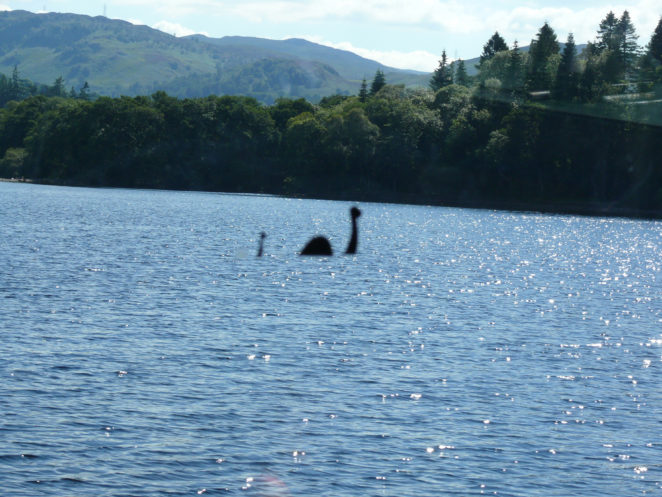
Not the Loch Ness Monster!


For a short time in 1972 many people genuinely believed that the Loch Ness Monster had been found. Unfortunately, it was dead. Even more unfortunately, the people in question had been taken in by a hoax.

It was found in the Loch by a group of zoologists who were “Nessie hunting”. The carcase, which was 15 feet long and weighed half a ton, was brought ashore and packed in ice. The scientists planned to take it back to their base in England and announce to an astonished world that there really were prehistoric monsters in Loch Ness and that they had one to show everybody.

However, word got around and the locals were distraught to learn that “their” monster was about to be whisked across the border and lost to Scotland. The van that contained “Nessie” was eventually stopped on the Forth Road Bridge and the monster was impounded by the Police. The truth then emerged as to what the zoologists were actually so keen to take south.

Some weeks before this incident a ship had set sail from the Falkland Islands in the South Atlantic with a cargo of live elephant seals destined for a zoo in England. However, as they neared the British coast they became aware that one of the elephant seals had died. It was then thrown overboard.

Shortly afterwards, the dead seal was caught in the nets of a fishing boat, and the fishermen thought that it would make an excellent Loch Ness Monster, so they took it to the Loch and threw it in.

The massive monster, which generated so much excitement and nearly led to an Anglo/Scottish international incident, was therefore nothing more than an unfortunate elephant seal that had met its end aboard a ship in the Atlantic, nowhere near Loch Ness.

© John Welford

Sunday, 7 February 2016

The Cottingley Fairies


Many people were convinced that a photograph taken in 1917 really did show fairies at the bottom of the garden. It was many years later that it was proved that the whole thing was a schoolgirl prank that got out of hand.

A famous photograph

Four fairies dance in a woodland setting, with a waterfall in the background. Three of them have huge wings growing from their shoulders, while the fourth plays a set of fairy pipes. Behind them, on a different scale to the fairies, a young girl looks at them and at the camera. To all intents and purposes she has found the fairies at the bottom of the garden and her friend has captured the scene in a photograph.

This photograph, the most famous of a series, five in all, achieved notoriety in the early 20th century as offering proof of the existence of fairies. The “Cottingley Fairies” convinced many people at the time, not least Sir Arthur Conan Doyle, the writer of the Sherlock Holmes stories, who wrote about the photographs in the Strand Magazine and thus brought them to wide public attention. How could they be anything other than what they purported to be, especially as the photographer was an innocent young girl aged 16?

A famous hoax

Although the photographs had their doubters, it was not until 1983 that they were finally proved to be fakes, by Geoffrey Crawley, the editor of the British Journal of Photography. He confirmed this by talking to the photographer, then in her 80s, who admitted that she and her cousin had concocted the hoax as a childhood prank, but it had got completely out of hand.

Early suspicions about the photographs revolved over whether some sort of double exposure technique had been used, which was a normal method for producing “ghosts”, but this was dismissed by experts at both Kodak and Ilford. Others wondered about the exposure used for the photographs, because, although the background waterfall is blurred, the dancing figures are in much sharper focus, which would have been unlikely with the long exposure necessary to get a good image in a relatively dark setting without supplementary lighting.

Despite this, some of the “experts” who accepted the photographs as being genuine claimed to detect “movement” on the part of the fairies, but they failed to consider that this could have been due to inexpert handling of a camera by a young amateur photographer, or even produced at the developing stage if the image had been under-exposed.

What really happened

The story of how the Cottingley Fairies were created goes back to a day in 1917 when two young girls were told off for playing in the stream and getting their clothes wet. Elsie Wright lived with her parents at Cottingley Dell, near Bingley in Yorkshire. Staying with the family was Frances Griffiths, aged ten, who lived in South Africa but was lodging with her uncle and aunt while her father was fighting in the War. The two were clearly great friends and would do anything to defend each other if one of them got into trouble.

Thus, when Frances claimed that the reason why they were late back and their clothes were wet was that they had been playing with the fairies, Elsie decided to produce the proof. A few days later, Elsie and Frances set off for the Dell with Elsie’s father’s plate camera and came back with a plate which they asked Mr Wright to develop. When he did, there was Frances, playing with the fairies.

At first, the Wrights laughed off this “evidence”, so the girls went back for more, eventually producing four more examples, including one of Elsie with a gnome. Mr Wright, who was happy to go along with all this and continue developing the pictures taken by his daughter, was always sceptical about how they had been produced, but Mrs Wright took them far more seriously. She mentioned them to someone she met at a lecture on folklore, and the thing snowballed, eventually gaining the attention of Sir Arthur Conan Doyle.

Conan Doyle was a convinced spiritualist, whose beliefs had been stirred after losing his son in the War and, like many others at the time, was seeking a way of making contact with his son’s spirit. He was a member of the Theosophical Society, which was particularly active in the post-war period and provided a ready audience and support for anything to do with the spirit world and parapsychology.

Conan Doyle praised the two girls to the skies, and actually gave them twenty pounds apiece. This made it very difficult for them to do anything other than stick to their original story, namely that the photographs were genuine.

Of course, they were not! Elsie Wright, although not particularly clever academically, did have some talent as an artist and later made a career as a colourist of sepia photographs. She simply copied some pictures of fairies from a book on to stiff card and cut them out. These cut-outs were then mounted on hatpins and arranged as required at the scene, along with the human model. On some of the photographs the hatpins are clearly visible, but those who did not wish to see such evidence of fakery simply did not see it. Even when Conan Doyle did detect a hole in one in the fairies’ bellies, where the hatpin had pierced the cut-out, he used it to claim that fairies must be able to reproduce as this was clearly a navel!

And so the Cottingley Fairies lived on in the public imagination, or at least in the imagination of those who would have been convinced of their genuineness come what may. The two girls, as they grew up, were always somewhat coy about what they had done, leaving open the possibility, to some people at least, that there was more than mere trickery behind the photographs. Having achieved fame from their childhood prank, they were determined to dine out on it for as long as possible. Despite Elsie’s admission to Geoffrey Crawley in 1983, she still maintained a mischievous attitude about the affair until the day she died, in 1988.


© John Welford